
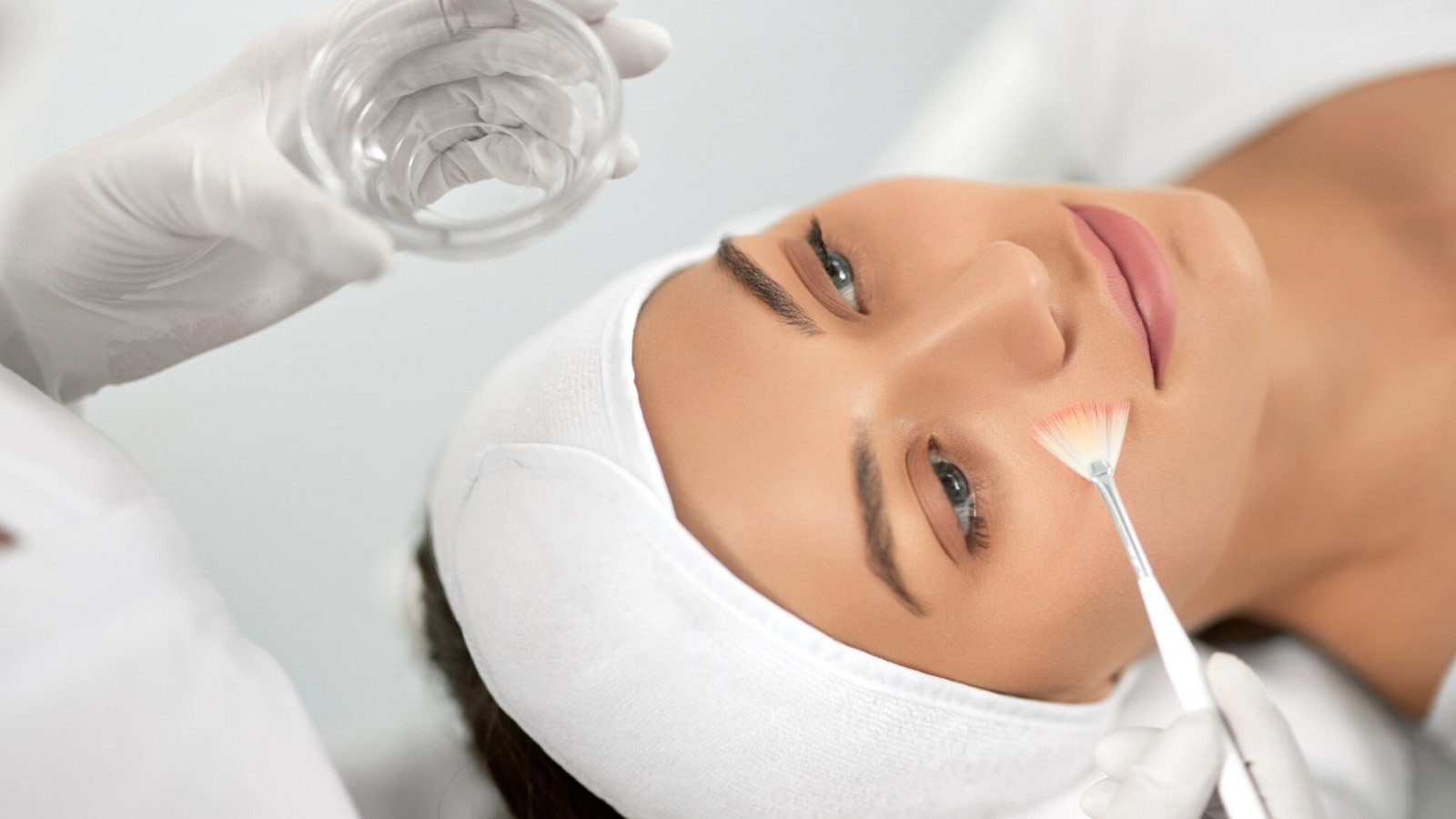
Χημικά Peeling: Ανανέωση Επιδερμίδας
Τι είναι το Χημικό Peeling και πώς λειτουργεί;
Το χημικό peeling αποτελεί μία από τις πιο κλασικές, δοκιμασμένες και αποτελεσματικές θεραπείες της αισθητικής δερματολογίας για τη βαθιά ανανέωση και αναζωογόνηση του δέρματος.
Η θεραπεία περιλαμβάνει την εφαρμογή ειδικών, ιατρικών χημικών διαλυμάτων (όπως οξέα φρούτων AHA, σαλικυλικό οξύ BHA, τριχλωροξικό οξύ TCA κ.ά.) στην επιφάνεια της επιδερμίδας. Τα οξέα αυτά προκαλούν μια ελεγχόμενη απολέπιση των νεκρών κυττάρων και των φθαρμένων εξωτερικών στιβάδων του δέρματος. Η διαδικασία αυτή διεγείρει τη φυσική κυτταρική ανανέωση και την παραγωγή νέου κολλαγόνου και ελαστίνης, αποκαλύπτοντας μια νεότερη, πιο λεία, λαμπερή και ομοιόμορφη επιδερμίδα.
Ποιοι είναι οι βασικοί τύποι Χημικών Peeling;
Ανάλογα με το βάθος διείσδυσης του χημικού διαλύματος και τις ανάγκες του δέρματος, τα peeling κατατάσσονται σε τρεις κατηγορίες:
- Επιφανειακά Peeling (Superficial Peels): Χρησιμοποιούν ήπια οξέα (όπως γλυκολικό, γαλακτικό ή σαλικυλικό οξύ). Απομακρύνουν μόνο την εξωτερική στιβάδα της επιδερμίδας. Είναι ιδανικά για θαμπή όψη, ήπια ακμή, διευρυμένους πόρους και λεπτές γραμμές, προσφέροντας άμεση λάμψη χωρίς χρόνο αποθεραπείας.
- Μεσαίου Βάθους Peeling (Medium-depth Peels): Διεισδύουν βαθύτερα, φτάνοντας έως το ανώτερο χόριο (χρησιμοποιώντας συνήθως TCA ή υψηλότερες συγκεντρώσεις οξέων). Είναι εξαιρετικά αποτελεσματικά για την αντιμετώπιση κηλίδων, πανάδων, μελάσματος, μέτριων ρυτίδων και ουλών ακμής.
- Βαθιά Peeling (Deep Peels): Διεισδύουν στα βαθύτερα στρώματα του χορίου για την αντιμετώπιση έντονων ρυτίδων, σοβαρής φωτογήρανσης και βαθιών ουλών. Πραγματοποιούνται υπό ειδικές συνθήκες και απαιτούν μεγαλύτερη περίοδο αποθεραπείας.
Ποιες βλάβες και ατέλειες αντιμετωπίζει το Χημικό Peeling;
Το χημικό peeling εφαρμόζεται κυρίως στο πρόσωπο, τον λαιμό, το ντεκολτέ και τα χέρια, προσφέροντας λύση σε πληθώρα δερματολογικών ζητημάτων:
- Υπερμελαγχρώσεις & Δυσχρωμίες: Μείωση ή εξάλειψη ηλιακών κηλίδων, πανάδων, γεροντικών κηλίδων και μελάσματος (χλόασμα).
- Ακμή & Λιπαρότητα: Ρύθμιση της έκκρισης σμήγματος, καθαρισμός των πόρων και μείωση των ενεργών βλαβών ακμής.
- Ουλές Ακμής: Λείανση των επιφανειακών ατροφικών ουλών και των μεταφλεγμονωδών σημαδιών.
- Λεπτές Γραμμές & Ρυτίδες: Βελτίωση της υφής και της ελαστικότητας του δέρματος.
- Θαμπή & Τραχιά Επιδερμίδα: Αποκατάσταση της φυσικής λάμψης, της φρεσκάδας και της βελούδινης υφής.
Συχνές Ερωτήσεις & Απαντήσεις για τα Χημικά Peeling
Είναι επώδυνη η διαδικασία;
Κατά την διάρκεια εφαρμογής του χημικού διαλύματος, ο ασθενής αισθάνεται συνήθως μια ήπια αίσθηση καύσου (κάψιμο) ή τσιμπήματος, η οποία διαρκεί λίγα λεπτά. Στα επιφανειακά peeling η ενόχληση είναι ελάχιστη, ενώ στα μεσαίου βάθους χρησιμοποιούνται ειδικοί μηχανισμοί ψύξης για τη μέγιστη άνεση του ασθενούς.
Πόση ώρα διαρκεί η συνεδρία;
Η εφαρμογή του χημικού peeling είναι μια πολύ γρήγορη διαδικασία. Μαζί με την προετοιμασία του δέρματος και την εφαρμογή των καταπραϋντικών προϊόντων στο τέλος, η συνεδρία διαρκεί περίπου 20 έως 30 λεπτά.
Πώς είναι το δέρμα μετά τη θεραπεία και πόσο διαρκεί η αποθεραπεία;
Η εικόνα του δέρματος εξαρτάται από τον τύπο του peeling:
- Επιφανειακό Peeling: Εμφανίζεται ήπια ερυθρότητα που υποχωρεί σε λίγες ώρες. Μπορεί να υπάρξει πολύ ελαφρύ, σχεδόν αόρατο ξεφλούδισμα για 2-3 ημέρες.
- Μεσαίου Βάθους Peeling: Το δέρμα εμφανίζει ερυθρότητα και μετά από 2-3 ημέρες ξεκινά μια φυσιολογική διαδικασία απολέπισης (ξεφλούδισμα), η οποία διαρκεί περίπου 5 έως 7 ημέρες.
Ποιες είναι οι απαραίτητες οδηγίες μετά τη θεραπεία;
Για την ασφαλή επούλωση και τη διασφάλιση των βέλτιστων αποτελεσμάτων:
- Αντηλιακή Προστασία: Η καθημερινή χρήση αντηλιακού ευρέος φάσματος με υψηλό δείκτη προστασίας (SPF 50+) είναι υποχρεωτική, καθώς το νέο δέρμα είναι ιδιαίτερα ευαίσθητο στην ηλιακή ακτινοβολία.
- Ενυδάτωση: Εφαρμογή των ειδικών ενυδατικών και καταπραϋντικών κρεμών που θα σας συστήσει ο δερματολόγος.
- Μην τραβάτε τα λεπιά: Απαγορεύεται αυστηρά να αποσπάτε ή να τραβάτε το δέρμα που ξεφλουδίζει, καθώς υπάρχει κίνδυνος δημιουργίας σημαδιών ή υπερμελάγχρωσης.
- Αποφυγή Θερμότητας: Αποφύγετε τη σάουνα, τα θερμά λουτρά και την έντονη σωματική άσκηση για τις πρώτες ημέρες.
Πότε είναι η καλύτερη εποχή για να κάνω Χημικό Peeling;
Η ιδανική περίοδος για τη διενέργεια χημικών peeling (ιδιαίτερα των μεσαίων και βαθύτερων) είναι οι μήνες με μειωμένη ηλιοφάνεια, δηλαδή από το φθινόπωρο έως τις αρχές της άνοιξης. Ορισμένα πολύ ήπια επιφανειακά peeling μπορούν να εφαρμοστούν καθ’ όλη τη διάρκεια του έτους με την κατάλληλη αντηλιακή προστασία.
Πόσες συνεδρίες απαιτούνται;
Ανάλογα με το πρόβλημα και το βάθος του peeling, μπορεί να απαιτείται ένας κύκλος 3 έως 6 συνεδριών με μεσοδιαστήματα 2 έως 4 εβδομάδων για τη μέγιστη βελτίωση, ενώ για τη διατήρηση του αποτελέσματος συνιστώνται επαναληπτικές συνεδρίες 1-2 φορές το χρόνο.
Υπεύθυνη Φροντίδα στο Dermtherapy
Η επιλογή του κατάλληλου χημικού peeling απαιτεί έγκυρη δερματολογική αξιολόγηση του φωτότυπου και των αναγκών του δέρματος, ώστε να επιτευχθεί το επιθυμητό αποτέλεσμα με απόλυτη ασφάλεια. Στο δερματολογικό ιατρείο Dermtherapy στο Γαλάτσι, ο Δερματολόγος – Αφροδισιολόγος Αλέξανδρος Σουμαλεύρης σχεδιάζει εξατομικευμένα πρωτόκολλα χημικών peeling με πιστοποιημένα ιατρικά σκευάσματα υψηλής ποιότητας.